Comprehensive Elevator Condition Assessment Guide: What Property Managers Need to Know
Managing your building's elevators is a complex, high-stakes responsibility that sits among dozens of other priorities competing for your attention and budget. Elevators represent significant capital assets that directly impact tenant satisfaction, property value, and safety compliance. Yet you need specialized engineering expertise to assess their true condition.
A comprehensive elevator condition assessment provides the clarity needed to manage these assets strategically. Rather than relying solely on maintenance reports or reacting when problems surface, you gain an independent diagnostic roadmap of the elevator's current performance, safety status, and remaining lifespan. This guide walks you through how condition assessments work, when they're needed, and how the data empowers smarter decisions about maintenance contracts, capital planning, and risk management.
What Is an Elevator Condition Assessment?
An elevator condition assessment is a comprehensive evaluation of your elevator system's current performance, safety status, and remaining useful life. Unlike a standard code inspection, which provides a pass/fail snapshot focused solely on minimum safety compliance, an elevator assessment delivers a diagnostic roadmap designed for long-term strategic planning.
A condition assessment goes deeper, examining component wear patterns, operational inefficiencies, and potential failure points before they become emergencies. It provides insight that helps you anticipate costs, prioritize repairs, and make informed decisions about whether to modernize or continue repairing aging equipment.
Key Indicators That Signal the Need for an Assessment
With evolving safety codes and increasing liability considerations, a comprehensive elevator assessment can mitigate risks and support compliance with today's technological and safety requirements. Understanding your system's condition and staying ahead of industry developments is crucial.
Taking a proactive approach to safety and maintenance starts with recognizing when your elevator assets need closer evaluation. The following warning signs indicate it's time to move beyond routine service calls and examine your equipment's condition:
Frequent or unexplained shutdowns: When an elevator experiences repeated outages without clear root causes, underlying mechanical or electrical issues may be developing.
Rising maintenance costs: Year-over-year increases in repair expenses often signal that components are approaching the end of their service life and patchwork fixes are becoming less effective.
Increased tenant complaints: Slow speeds, rough rides, inaccurate floor leveling, or unusual noises may indicate performance degradation that impacts tenant satisfaction and potentially signals safety concerns.
Aging equipment: As elevator equipment ages and nears the end of its typical service period, building owners and property managers need detailed condition data to plan capital expenditures strategically.
Upcoming budgeting cycles or property transactions: Before you finalize long-term budgets or negotiate property sales, an independent elevator condition assessment provides the objective data needed for accurate financial planning and due diligence.
The Elevator Condition Assessment Process From Start to Finish
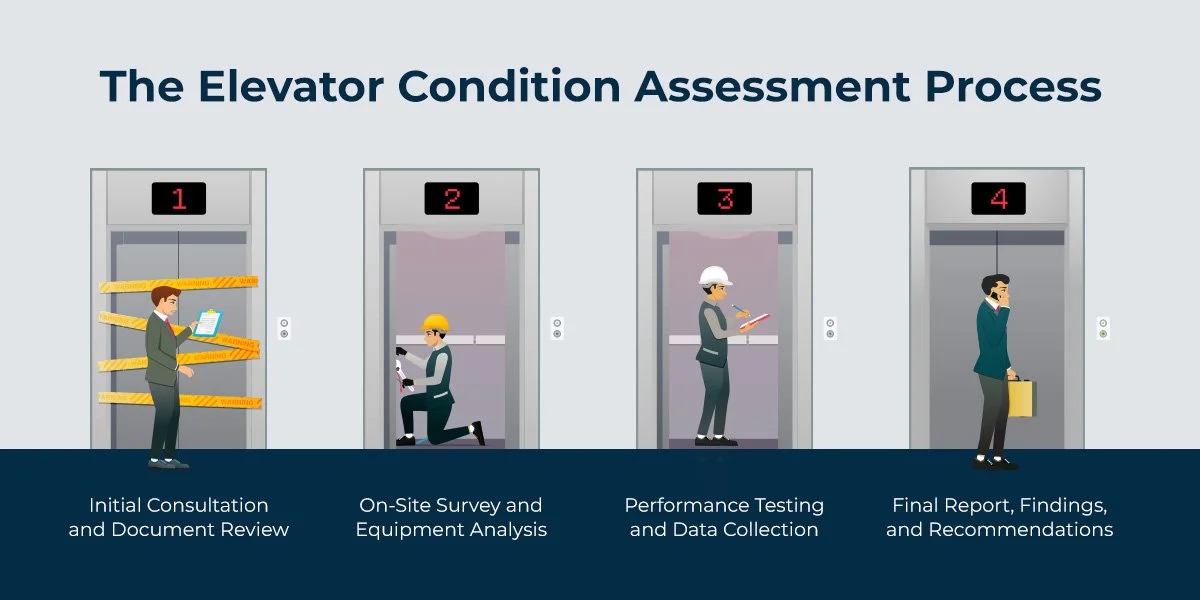
If you need a building elevator assessment, understanding the process helps you prepare. The assessment typically involves both document analysis and hands-on equipment evaluation.
Step 1: Initial Consultation and Document Review
The assessment begins with a review of your maintenance logs, repair invoices, and existing service contracts. This historical data reveals patterns in equipment performance and helps identify recurring issues. During the initial consultation, you'll discuss your building's specific needs, budget constraints, and any known elevator problems you need addressed.
Step 2: On-Site Survey and Equipment Analysis
Technicians conduct a thorough physical inspection of the machine room, hoistway, cab components, and control systems. This hands-on evaluation examines the condition of critical components, including motors, cables, rails, doors, safety devices, and, where applicable, hydraulic systems.
Step 3: Performance Testing and Data Collection
The team tests ride quality, door-opening timing, speed accuracy, and floor-leveling precision. These performance metrics are compared against manufacturer specifications and industry standards to identify deviations that impact safety or user experience.
Step 4: The Final Report, Findings, and Recommendations
The deliverable from professional elevator condition assessments is a comprehensive report that translates technical findings into clear business insights. You'll receive a prioritized list of recommended repairs, estimated costs, and timeline projections that enable data-driven decision-making about your elevator assets.
Using Assessment Data for Strategic Planning and Budgeting
The true value of a commercial elevator assessment lies in applying the findings to financial planning and vendor oversight. The detailed condition data transforms how you manage both short-term maintenance spending and long-term capital investments.
Validating Your Current Maintenance Contract and Spend
Assessment findings may reveal whether your current maintenance company meets contractual obligations and if your maintenance agreement adequately addresses your equipment's actual condition. By comparing the assessment's documentation of component wear and needed repairs against what your maintenance contract covers, you can identify gaps in service and hold providers accountable for work that should have been completed.
Building a Data-Driven, Long-Term Capital Plan
The remaining useful life estimates in your property's elevator assessment report enable precise forecasting for repairs and modernization projects. Instead of reacting to equipment failures and scrambling to fix them, you can develop accurate multiyear capital plans that align with your property's financial cycles. This effective capital planning approach also improves tenant safety and satisfaction by addressing root-cause issues before they escalate into service disruptions.
Negotiating With Vendors for Repairs or Modernization
An independent, third-party elevator condition assessment provides the unbiased technical data needed to negotiate from a position of strength. When service providers propose repairs or modernization projects, you can validate their recommendations against objective condition findings —ensuring you're paying for work that's genuinely necessary and negotiating maintenance contracts based on the true needs of your equipment rather than vendor sales priorities.
How Assessment Findings Impact Your Insurance and Liability
A well-documented history of proactive elevator oversight serves as protection in risk management and liability scenarios. When an incident occurs, an elevator condition and maintenance assessment report demonstrates that you've acted responsibly to maximize equipment safety. It is a critical factor in both liability claims and insurance renewals.
Identifying and addressing issues noted in a third-party assessment, particularly those related to safety code compliance for existing elevators, helps mitigate premises liability risk. Some insurance carriers may require property owners to maintain documented proof of regular professional evaluations. Working with an independent elevator assessment company helps ensure your documentation meets these expectations and provides the objective evidence needed to support your duty of care to tenants and visitors.
Partner With ATIS for Elevator Condition and Maintenance Assessment
Shifting from reactive to proactive management starts with understanding the true condition of your elevator assets. ATIS's Condition and Maintenance Assessment delivers the unbiased, expert analysis property managers need to control costs, reduce liability exposure, and plan capital investments with confidence.
Our team provides elevator assessment services that translate technical findings into clear business intelligence. Our solutions allow you to hold service providers accountable, validate your maintenance spend, and make data-driven decisions that protect both your budget and your tenants.
Ready to take control of your elevator strategy? Contact an ATIS elevator advisor to schedule your assessment.