
Custom Maintenance Contract and RFP Consulting
Don’t sign their contract, make them sign yours!
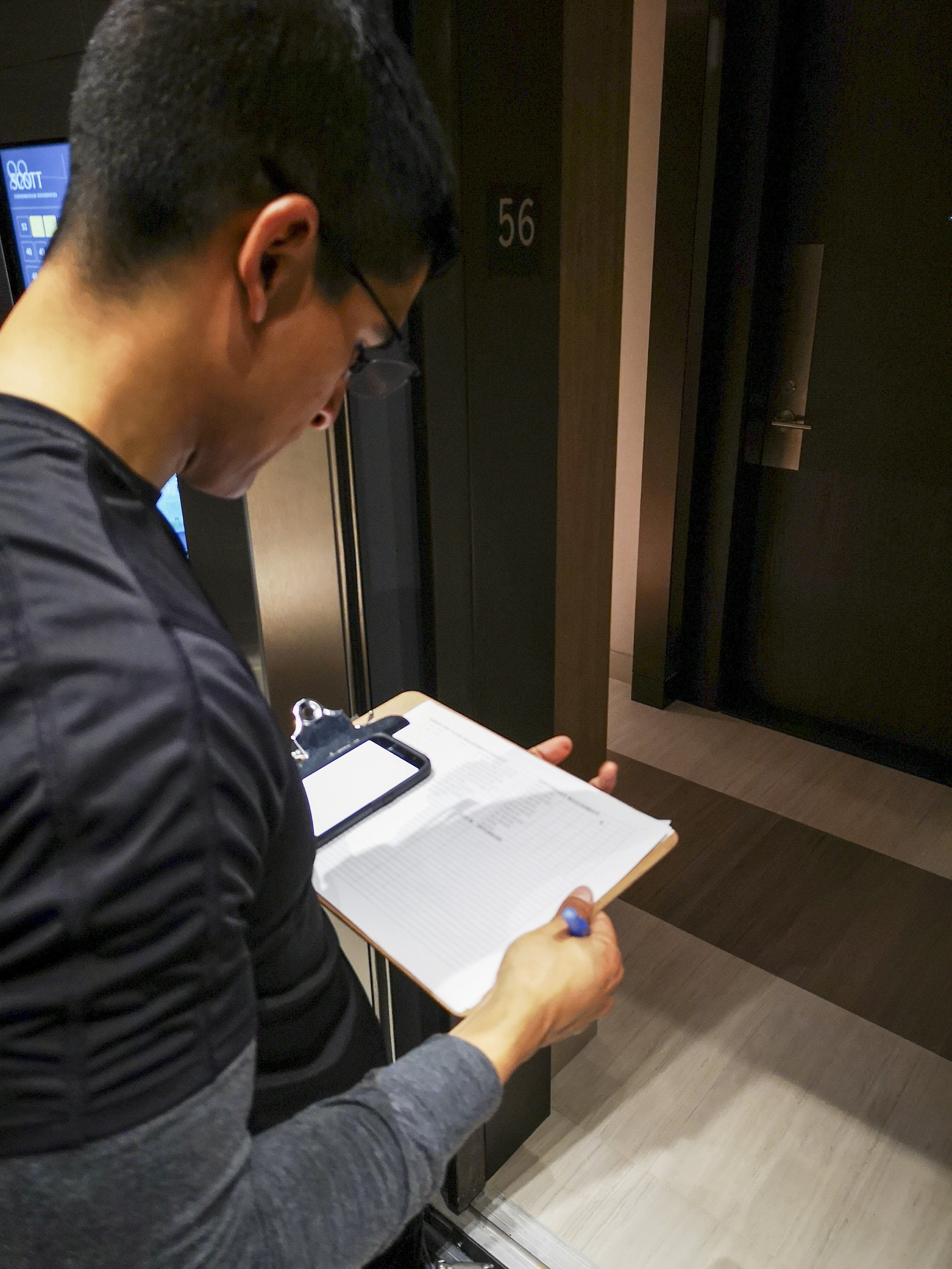
You need an elevator maintenance contract that meets your unique needs
An elevator maintenance specification is a detailed contract for the fulfillment of elevator maintenance services that will maintain and ensure the longevity of your unique equipment installation. ATIS and KJA Canada empower building owners and property managers with tailored elevator and escalator maintenance specifications that truly address your facility’s unique assets and operational requirements.
Why Customized Maintenance Contracts Matter
A well-written maintenance agreement is essential for ensuring the longevity and reliable operation of your vertical transportation equipment. Our elevator and escalator service agreement consulting helps you develop robust, proactive documents that go beyond the minimum. We address critical issues like response times, preventive service intervals, component coverage, and clear performance standards, giving you leverage when holding vendors accountable.
Custom Maintenance Specification Services Include:
Stakeholder meeting to determine needs
Assessment of the equipment type, building type, and usage
Review of specifications with stakeholders
Revisions and rewrites based on stakeholder feedback
When to Consider Using Custom Maintenance Specification Design Services
Unfortunately, most elevator companies offer little more than a reactive contract that doesn’t preserve your equipment. Over time, the neglect from not doing the necessary maintenance degrades equipment and takes years off its useful life.
ATIS’s commercial elevator and escalator maintenance consulting provides a layer of expert oversight. We have decades of experience in maintenance auditing, so we know where most vendors fall short and how to ensure your equipment doesn’t suffer as a result.
We’ve been inspecting and assessing elevators for decades - and we know where maintenance often falls short. Our services can preserve your equipment, ensure safety, and save you money.
Custom Request for Proposal (RFP) Services
Custom bid document
Selection of qualified bidders who receive the bid document
Organization of pre-bid meetings to answer maintenance vendor questions
Bid analysis presented to stakeholders
Price and clarification negotiation as needed
Award and virtual kick-off meeting with chosen vendor
Why ATIS for RFP Services
It’s important to understand a vendor’s strengths and weaknesses, not just their price. We’ve been providing elevator and escalator maintenance contract reviews and similar services for more than 60 years. Our experience and elevator industry expertise can help you analyze the pros and cons of each proposal to make the best decision for your building and equipment.
Unbiased guidance: As third-party elevator maintenance oversight providers, we have no ties to specific manufacturers or vendors. Our recommendations for maintenance management are always in your best interest.
Custom specifications: Every elevator and escalator maintenance specification we develop is unique to your equipment, building type, and operational needs.
Powerful cost-reduction strategies: Our services focus on identifying cost drivers and implementing practical, sustainable elevator and escalator maintenance cost reduction measures.
Comprehensive support: We provide elevator and escalator maintenance advisory services throughout every step of the contract review, RFP, and ongoing maintenance process, helping you negotiate stronger terms and hold your vendors accountable.
Service quality assurance: Through service quality consulting, we safeguard the reliability, lifespan, and compliance of your vital vertical transportation systems.
End-to-end project management: From drafting bid documents and overseeing the RFP process to facilitating contract negotiation and supervising your preventive maintenance program, we make sure nothing falls through the cracks.
Frequently Asked Questions
Property owners and facility managers looking to create maintenance contracts typically ask the following questions:
-
Facility managers typically track the following KPIs to evaluate elevator maintenance performance:
Elevator uptime: Track the percentage of time each elevator remains operational compared to its scheduled operating time. This metric helps show whether your maintenance program is effective and how well your maintenance provider is keeping equipment in service.
Maintenance rates: Consider the preventive maintenance completion rate, percentage of planned maintenance in comparison to emergency maintenance, and maintenance backlogs. Preventive maintenance completion rates indicate how often scheduled work gets done on time. Higher rates indicate better reliability. Meanwhile, higher instances of emergency maintenance indicate reactive responses. A growing backlog also compounds safety risks when critical tasks get deferred.
Callback rate: Callback rates measure how often your vendor has to return after maintenance or repair work to address an unplanned issue. Lower rates indicate that elevator contractors get it right the first time.
Mean time between failures (MTBF) and mean time to repair (MTTR): MTBF tells you how long elevators run before breaking down. A rising MTBF can indicate a working preventive strategy. MTTR measures a contractor's speed when restoring equipment. High MTTRs indicate skill gaps, part shortages, and poor diagnostic processes.
Entrapment response times: These indicate how quickly contractors free someone stuck in an elevator. Fast response times come with improved safety and indicate good maintenance practices.
Overtime billing expenses: Overtime results in additional costs that affect your budget. Frequent overtime also indicates poor scheduling.
Obsolescence: An elevator contractor should ideally have the parts you need in case of incidents. Readily available inventory enables shorter downtimes.
-
Your elevator service contract should cover the following metrics and requirements:
Service and equipment coverage: Include service level agreements, such as covered service hours, elevator response time requirements, and uptime requirements. Decide whether subcontractors can do the work, as this affects quality control and accountability. Define numerical targets, such as percentage rates, based on your equipment. Ensure services cover all your equipment, and address whether your elevators have obsolete parts.
Financial obligations and protections: Escalation clauses should determine how and when prices increase. Make sure increases are reasonable. Labor and overtime rates should also be clear and competitive. Cap any additional fees.
Code compliance and testing requirements: Determine testing and assessment costs. Include a clause that requires compliance with your maintenance control program (MCP) to maintain standardized, compliant records.
Termination and renewal clauses: You should be able to terminate the agreement with reasonable notice, especially if the provider fails to meet their obligations. Avoid automatic renewals that lock you in and prevent you from navigating competitive bids.
Ultimately, writing an elevator maintenance contract means ensuring it protects you and the facility, not just the elevator service provider.
-
Use your MCP and completion records to track elevator repair costs and frequency. The MCP is required by ASME A17.1, the Safety Code for Elevators and Escalators, which is adopted by many jurisdictions. Review your repair and replacement records and identify how often technicians returned between visits. Separate the costs and frequency history for each elevator car to catch which units have been impacting your budget the most.
Get Expert Third-Party Elevator and Escalator Maintenance Oversight Today
Ready for quality elevator or escalator maintenance specification design services? Take control of your vertical transportation maintenance, protect your investment, reduce costs, and stay compliant for years to come. We have the experience and expertise it takes to help you attain your preventive maintenance program goals.
From Our Clients
Case Studies