Healthcare Facility Elevator Management: Critical Systems for Patient Safety and Care
In hospitals and other medical care facilities, an elevator system is critical infrastructure that directly impacts patient safety, emergency response, and operational efficiency. When an elevator fails, the consequences impact patient outcomes, staff safety, and your ability to meet regulatory requirements.
Hospital elevator maintenance demands a more rigorous approach than other settings such as commercial real estate. Healthcare environments impose unique stresses on equipment through constant use, exposure to cleaning agents, and the weight of medical equipment. Maintenance programs must account for these factors while minimizing disruption to patient care operations.
Managing healthcare facility elevators also means navigating national safety codes, local compliance requirements, and specialized equipment standards. Equipment must perform reliably when it’s needed most.
Ensuring Regulatory Compliance
Healthcare elevator management begins with compliance. It's the foundation that keeps patients safe and facilities operational. While safety standards are set at the national level, enforcement happens locally, creating a complex web of regulations that varies by jurisdiction. Understanding this landscape is essential for a facilities leader responsible for medical facility vertical transportation systems.
Understanding Key Standards
The American Society of Mechanical Engineers (ASME) and the National Fire Protection Association (NFPA) establish the codes that govern elevator safety in healthcare settings.
NFPA 101 (Life Safety Code), NFPA 99 (Health Care Facilities Code), and NFPA 70 (National Electrical Code) work together to address mechanical safety, fire protection, and electrical systems. For facilities seeking or maintaining Medicare and Medicaid certification, compliance with NFPA 101 and NFPA 99 is mandatory.
The Authority Having Jurisdiction (AHJ) is the final arbiter of code enforcement at the local level, and requirements can vary significantly between jurisdictions, even for facilities within the same healthcare network. Building a relationship with your AHJ and understanding its specific expectations can help protect against costly violations and project delays.
Common Regulatory Violations
The state of Ohio publishes a common violation reference list that provides practical insight into what inspectors look for during elevator inspection visits. Use this as a checklist to help you stay ahead of compliance issues. Always adhere to AHJ code to maintain full legal compliance and minimize liability risk.
Critical Systems for Patient Safety and Emergency Preparedness
Hospital elevators are critical components of your emergency response infrastructure and must be maintained to ensure they operate as expected when lives are on the line.
Specialized Requirements for Hospital Elevators
Hospital elevator compliance is about much more than simply meeting code requirements. It requires proactive verification that systems remain ready to perform their life-saving functions at any moment. For example, elevator code blue readiness means medical teams can commandeer elevators during emergencies, bypassing normal operations to rush patients to critical care units.
Elevator protocol and maintenance also includes ensuring that protective padding remains intact, monitoring equipment stays secure during transport, and communication systems function reliably. In life-or-death situations, elevator performance directly influences outcomes. Staff training on proper protocols reduces risks during transport and ensures coordination between departments when moving patients between floors.
Compliance violations in healthcare settings can carry consequences beyond fines. Depending on the violation and facility type, they may create certification, operational, or liability concerns if equipment failures contribute to adverse patient outcomes. Regular third-party inspections provide objective verification that your systems meet all applicable standards.
Fail-Safe Emergency Power and Backup Systems
Emergency power systems for hospital elevators represent a critical safeguard that facilities cannot afford to overlook. During power outages, applicable codes or facility requirements may require designated elevators to remain available through emergency or standby power to support emergency response and patient movement. Regular testing of these backup systems verifies they'll activate when needed most. Testing should occur under load conditions that simulate actual emergency scenarios, not just basic functionality checks.
Emergency communication systems inside elevators are equally critical. Traditional POTS lines are being phased out, creating both a compliance challenge and an opportunity to modernize. Upgrading to Voice over Internet Protocol (VoIP)-based systems ensures reliable 24/7 elevator emergency monitoring that meets current code requirements while providing better functionality.
Fire Service Access and Evacuation Protocols
Fire Service Access Elevators (FSAE) serve a specific purpose during emergencies. They're designed for firefighter use, allowing first responders to reach upper floors quickly and safely when stairwells may be compromised. NFPA 101 establishes clear requirements for these systems.
Understanding which elevators in your facility are designated for fire service access and ensuring they meet all operational requirements is a core component of emergency preparedness planning.
Patient-Centric Operations in Transport, Infection Control, and Logistics
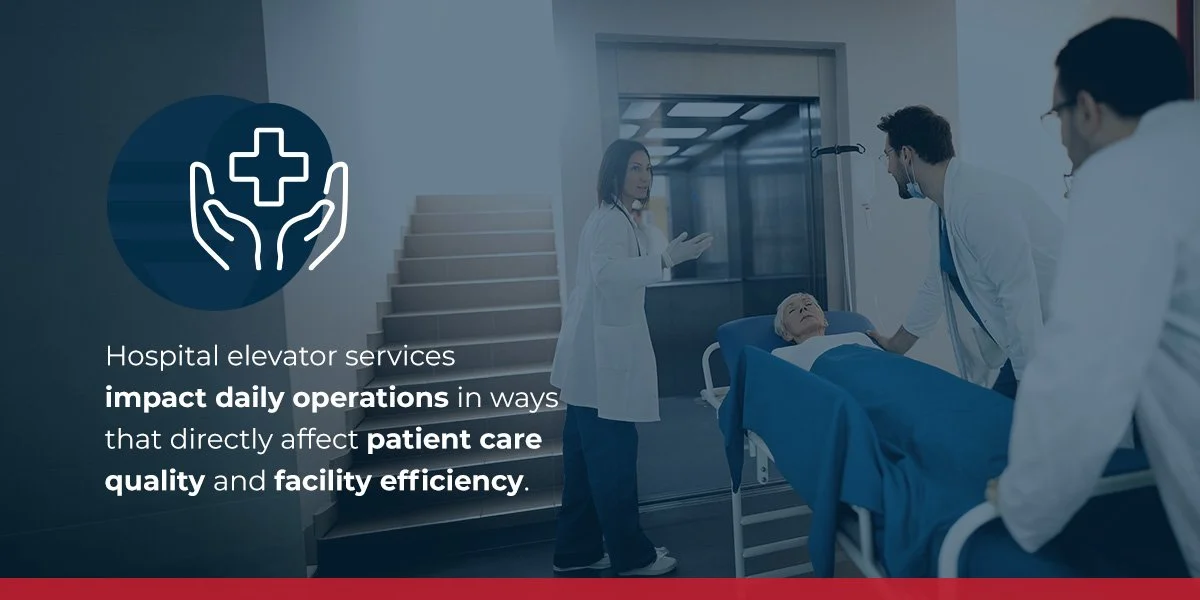
Hospital elevator services impact daily operations in ways that directly affect patient care quality and facility efficiency. How you manage patient transport, infection control, and logistics determines safety outcomes and operational performance.
Best Practices for Safe Patient Transport
Moving patients safely via elevator requires clear protocols. Staff should position patients headfirst into elevators when possible, secure all equipment before movement begins, and maintain clear communication throughout the transport process.
When it comes to patient handling, proper protocols benefit both patients and the staff members responsible for their care. When your team follows established standards, you reduce risk across the board.
Core Infection Control for Vertical Transportation
Elevators are high-traffic, enclosed spaces that require dedicated attention within your facility's overall infection control strategy. High-touch surfaces like buttons and handrails need frequent cleaning using appropriate disinfectants. Air circulation systems must be maintained to minimize airborne pathogen transmission.
Integrating Elevators With Patient Flow and Hospital Logistics
Elevator availability also impacts operational metrics. Emergency response times, patient throughput, and staff efficiency all depend on reliable vertical transportation. When elevators experience frequent downtime or poor performance, the ripple effects touch every department.
Strategic elevator management considers how systems integrate with broader facility operations. Scheduling preventive work during low-traffic periods, monitoring performance data to identify patterns, and addressing issues early all contribute to smoother daily operations.
A Framework for Asset Management
Effective healthcare facility elevator management extends beyond day-to-day operations into long-term asset strategy. The decisions you make about maintenance, modernization, and vendor relationships directly impact both costs and performance over the life cycle of your equipment.
Develop a Proactive Maintenance and Inspection Plan
A data-driven approach to maintenance scheduling, supported by regular third-party inspections, helps you verify that service providers are delivering on their promises and reduce the risk of unplanned downtime.
Independent inspections provide objective insight that's free from conflicts of interest that can arise when service providers inspect their own work. This approach can help extend asset lifespan and reduce the total cost of ownership.
Scheduling preventive healthcare maintenance during low-traffic periods protects both equipment reliability and daily clinical workflows.
When to Repair vs. When to Modernize
Hospital elevator modernization decisions carry higher stakes than typical commercial upgrades. Aging systems in healthcare facilities risk compliance failures that can delay patient transport or limit emergency response capabilities. Strategic modernization planning helps you prioritize investments based on equipment condition, regulatory requirements, and patient safety considerations. Modernization also presents opportunities to improve infection control features, upgrade emergency communication systems, and enhance energy efficiency.
Working with specialists in modernization consulting and capital planning helps you make informed decisions based on your facility's specific needs. Learn more about how ATIS's healthcare facility modernization helped our client improve safety, reliability, and efficiency.
The Role of a Third-Party Consultant in Vendor Oversight
Elevator vendor management in healthcare requires independent, third-party oversight to ensure service providers deliver contracted maintenance and respond appropriately and accountably to performance issues.
ATIS's managed services bring centralized, data-driven visibility to elevator performance, compliance tracking, and vendor accountability across healthcare portfolios. Whether you operate a single facility or manage systems across multiple jurisdictions, comprehensive oversight helps keep elevators running safely and reliably, and reduces the administrative burden on facilities teams.
Get Started With ATIS
With a national reach and a consultative approach built on trust, ATIS helps healthcare facilities maintain uptime, meet regulatory requirements, and protect patient safety above all. Contact us today to get started.