
Condition and Maintenance Assessments for Elevators and Escalators
For Elevators and Escalators
Professional elevator condition assessments and escalator maintenance assessments are key to maximizing vertical transportation reliability and safety in any building. ATIS’s industry-leading elevator and escalator maintenance assessment services provide building owners and facility managers with a clear, actionable roadmap for equipment performance, compliance, and planning.
Expert Elevator and Escalator Condition Assessment Services
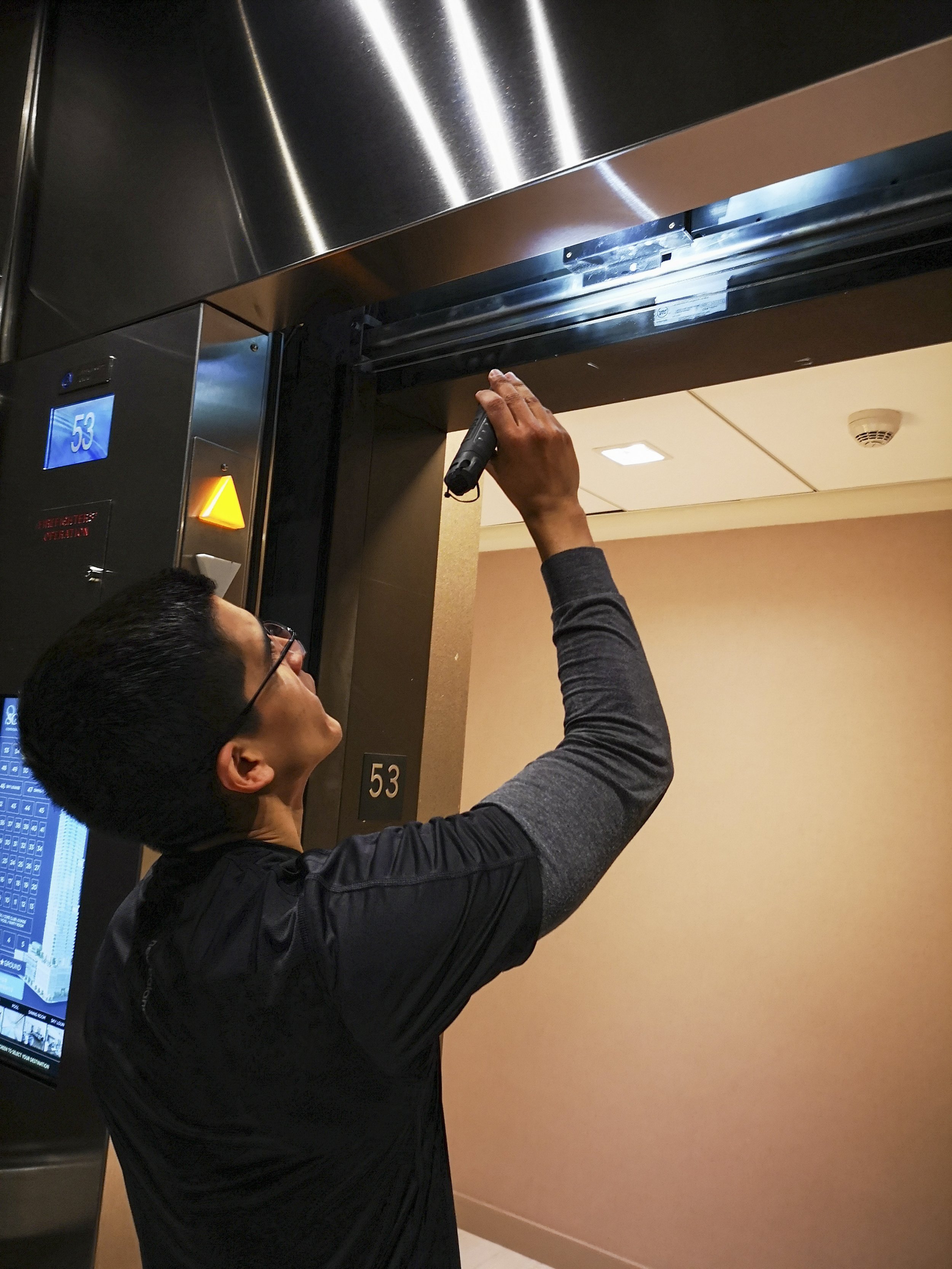
Our elevator and escalator condition assessment solutions are more than just a checklist. Each evaluation includes a hands-on elevator or escalator equipment assessment conducted by experienced advisory professionals.
A Condition and Maintenance Assessment Includes:
2-4 hour survey of equipment (dependent on units/stops)
All travel to and from job
Written assessment of condition
Analysis of past maintenance, inspection records, and contract
Written evaluation of maintenance program
Estimated lifetime of equipment
Basic Capital Planner
Our specialists perform comprehensive on-site inspections to assess your equipment's operational performance, maintenance quality, and anticipated lifespan. This analysis will help guide future decisions regarding your maintenance provider and service level, help start your capital planning process, and could eliminate unnecessary shutdowns. Many clients find that the assessment helps them to avoid unnecessary work proposed by their elevator contractor.
We perform elevator and escalator service quality audits to verify compliance with both local and national maintenance quality inspection standards. Our thorough performance evaluation procedures ensure each system operates smoothly, safely, and as designed. Our team applies reliability assessment methods to uncover patterns of downtime or recurring issues that may affect building occupants or tenant satisfaction.
ATIS stands out for delivering objective, actionable reporting. After your assessment, you’ll receive a comprehensive, easy-to-understand report. Our experts will walk you through findings, recommend corrective actions if needed, and help you confidently navigate vendor proposals or compliance audits.
When to consider a condition and maintenance assessment
Your elevator is often in need of costly repairs and regularly shut down for maintenance or repairs
You received a modernization or repair quote and need unbiased guidance before you spend
You’re creating a capital plan to prepare for upcoming expected expenditures
Why Condition and Maintenance Assessments Are Essential
A regular elevator or escalator condition and maintenance assessment ensures you meet current monitoring requirements. This data-driven approach helps property teams identify efficiency gaps through elevator and escalator efficiency analyses, discover potential safety issues, and determine when to prioritize repairs versus full modernization. Many clients rely on our maintenance audit services to build their capital plans and negotiate more effective service agreements.
At ATIS, we have extensive expertise in code compliance and have provided assessments and consulting services for many facilities, from healthcare centers to retail offices. In an elevator condition assessment, we evaluate your elevator’s components, maintenance history, and overall performance. We help extend equipment lifespan and support compliance with local and national safety standards.
A missed elevator inspection can result in safety concerns and significant financial penalties. We recommend an elevator service quality audit at least once annually, especially for high-traffic buildings, to help you stay ahead. Routine assessments help keep your equipment safe, efficient, and ready for inspections.
Frequently Asked Questions
Property owners and facility managers considering condition assessments typically ask the following questions:
-
The common reasons elevators fail mandated inspections include:
Incomplete documentation: Elevator owners may have incomplete maintenance records, missing signatures, or a lack of equipment information, such as serial numbers. Unorganized, incomplete documents can signal poor elevator maintenance.
Deferred maintenance and inspections: Elevator units must have a maintenance control program (MCP), highlighting the maintenance activities required of each elevator throughout its lifetime. This MCP must often be kept on-site. Maintenance records would show whether this program had been followed. Deferred maintenance and inspections can also result in noncompliance with newer code requirements.
Code violations: Jurisdictions typically adopt industry standards in their regulations, specifically ASME A17.1, or the Safety Code for Elevators and Escalators. These code requirements evolve, which necessitates working with professionals who stay on top of the changes. Violation examples include door obstructions or misalignment, damaged cab interiors, and nonfunctional emergency alarms.
Unauthorized modifications: Elevator modifications typically require permits and code reviews, such as when you install cameras, modify finishes, or switch operating systems. Even well-intentioned upgrades may not meet safety standards.
You can prevent failed inspections by keeping an organized system and standardizing documentation procedures. Use a centralized calendar that notifies your team of upcoming maintenance or inspection deadlines. Pre-inspection assessments can also help you stay on top of compliance. Don't ever assume that modifications are too small and can't affect elevator safety.
-
During an elevator inspection, inspectors often look for violations against applicable elevator codes and regulations. They often follow a standard checklist based on ASME A17.2, which is the Guide for Inspection of Elevators, Escalators, and Moving Walks. Their checklist typically includes inspection of all elevator components, such as those of the elevator car, machine room, hoistway, and pit. Hydraulic and electric elevators also have distinct requirements.
Each checklist category reviews failure modes that can cause injury or death. For instance, in an elevator car, they may inspect the door reopening device, door closing force, and emergency signals. In the machine room, inspectors may review wiring and switches, machine brakes, and controller conditions.
Keeping a condition assessment checklist can help you prepare your elevators before inspection. Working with ATIS can streamline the process.
-
You can prepare your elevators for their annual safety test through an elevator condition and maintenance assessment. For instance, working with ATIS can help you catch any issues states may flag before the mandated test. Generally, you need to have the required documentation or proof of compliance for inspectors to review. ASME A17.1 requires:
MCP records.
Repair and replacement records.
Quarterly oil level logs for hydraulic units.
Quarterly firefighters' emergency operation checks.
Prior annual and five-year test reports.
You should keep these records on-site and retain them for five years. Opting for a maintenance program review can help you avoid noncompliance repercussions, such as penalties and elevator shutdowns.
Get Expert Analysis of Your Escalators and Elevators
Being proactive about the safety and reliability of your building’s elevators and escalators is crucial. ATIS is your trusted partner for clear, unbiased equipment analysis and maintenance advisory, and you can count on us to meet your elevator or escalator maintenance assessment needs. Contact us today to learn more or to bundle your next assessment with additional ATIS services for maximum value.
Additional Assessments Available
Contact us for multiple service discounts.
-
This due diligence service is ideal for investors seeking to learn more about the operational lifespan of elevator assets within a property and the projected capital investment.
-
Maintaining clean oil is essential for hydraulic elevators, so schedule an oil test to maximize proper functionality.
-
Many states now mandate safety features on door lock monitoring. Our door lock monitoring assessment verifies your equipment's compliance with these requirements.
From Our Clients
Case Studies