24/7 Elevator Emergency Monitoring: Ensuring Passenger Safety in Critical Facilities
When a passenger becomes trapped in an elevator at your facility, every second counts. The quality of your emergency response affects passenger safety and regulatory compliance, and can determine liability exposure in critical moments. Yet many building owners rely on outdated elevator phone systems that fail to meet evolving safety codes, can't support passengers with hearing or speech impairments, and depend on obsolete landline technology that telecommunication providers are actively phasing out.
Elevator emergency monitoring is essential for protecting the people you serve and your reputation, regardless of the operating environment. While particularly critical in high-stakes environments where patient care or guest experience matters, the safety and regulatory compliance benefits all facilities.
Is Your Elevator Communication System Putting You at Risk?
The elevator emergency phone in your building might seem like a simple piece of safety equipment, but the technology and regulations governing these systems have changed dramatically over the years. What worked reliably for decades now exposes facilities to gaps in compliance, accessibility, and performance. Building owners who assume their existing systems meet current standards often discover otherwise during mandated elevator inspections or during an actual emergency when a trapped passenger can't get help.
The Disadvantage of Outdated Phone Technology
For most of the 20th century, Plain Old Telephone Service (POTS) lines were the gold standard for elevator emergency phones. These analog landlines provided dedicated, reliable connections that building codes required and facility managers trusted. Major telecom providers are now systematically phasing out POTS infrastructure in favor of modern IP-based networks. This transition, driven by FCC regulations encouraging the shift to digital communications, has created significant challenges for building owners who still rely on traditional landlines.
As POTS lines disappear, facilities face rising maintenance costs, degraded service quality, and the eventual prospect of complete service shutdowns. The landline your elevator phone depends on today may not exist tomorrow, leaving you scrambling for a last-minute replacement that meets current code requirements.
Understanding Current Elevator Safety and Accessibility Requirements
Regulatory changes have compounded the technology challenge. Today's ASME A17.1 code introduces requirements that go beyond traditional voice-only communication. Modern codes now mandate two-way visual and text-based communication capabilities in elevator emergency systems. These features are also critical for supporting passengers with hearing or speech impairments and represent a fundamental ADA compliance issue.
The code specifically requires a method to visually determine if a passenger is trapped and to facilitate text-based communication. Traditional POTS-based phone systems can't deliver these capabilities, leaving facilities reliant on outdated technology exposed to regulatory risks and accessibility gaps that put vulnerable passengers at risk.
Why Continuous Elevator Monitoring Is Essential for Critical Facilities
In critical facilities, such as healthcare and hospitality environments, elevator entrapments create risks that extend beyond the elevator cab. Continuous elevator monitoring is crucial for passengers and your facility because it:
Preserves patient safety: Trapped patients experiencing medical emergencies need immediate professional assistance to prevent the escalation of health crises.
Enhances the guest experience: Hotel guests stuck between floors may share negative experiences in online reviews that damage your brand.
Maximizes professional response: Trained monitoring teams dispatch help, assess situations visually, and provide reassurance during frightening moments.
Protects your reputation: Your emergency response becomes part of your brand promise, and how you handle these critical moments defines client trust.
For facilities managers at hospitals and hotels, elevator emergency response is about more than compliance. It's a core component of the care and service excellence that sets your facility apart.
Key Components of a Comprehensive Elevator Safety Monitoring Solution
Modern elevator safety monitoring goes beyond replacing a phone line. It's an integrated system that combines advanced technology with professional service and strategic facility management. Here's what a modern monitoring system looks like:
Reliable Connections and Two-Way Communication
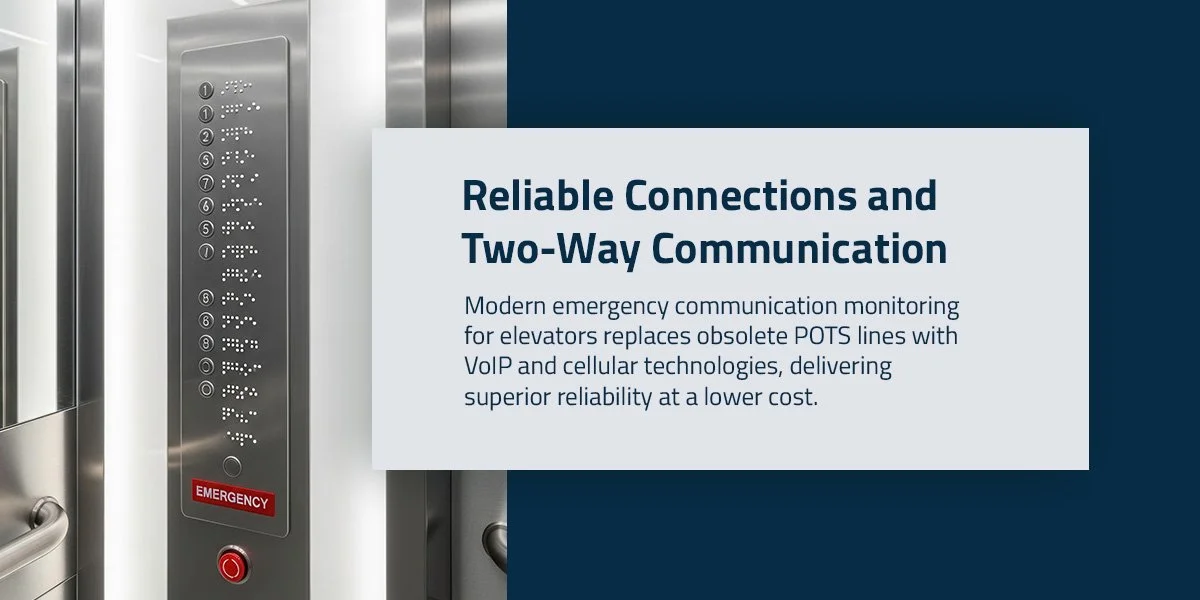
Modern emergency communication monitoring for elevators replaces obsolete POTS lines with VoIP and cellular technologies, delivering superior reliability at a lower cost. These connections work during power outages and service disruptions, ensuring passengers can always reach help. Current in-car equipment goes beyond voice calls to provide video and text communication features required by new accessibility codes.
Facilities planning elevator modernization projects should know these technologies aren't limited to new installations. Retrofitting existing elevators with modern communication equipment is often straightforward and can be coordinated with other upgrades to minimize disruption and maximize value.
24/7 Elevator Emergency Monitoring
There's a meaningful difference between routing emergency calls to a basic answering service and connecting passengers to a professional elevator monitoring company with trained specialists. When evaluating elevator emergency response services, consider these capabilities:
Immediate dispatch protocols: Trained agents contact building security, maintenance teams, and emergency services without delay.
Visual assessment capability: Some modern monitoring centers can view live video feeds to assess passenger condition and the severity of entrapment.
Passenger reassurance: Professional agents provide calm, empathetic communication to reduce anxiety during what can be a frightening experience.
24/7/365 availability: Emergencies don't follow business hours, and neither should your monitoring team.
What to Look for in an Elevator Monitoring Services Provider
Not all monitoring partners offer the same depth of expertise or quality of service. As you evaluate vendors, focus on these differentiating factors:
Elevator specialists: Choose partners who understand elevator mechanics and entrapment protocols, not general call-center providers with surface-level knowledge.
Jurisdictional code expertise: Compliance requirements vary by location. Your partner should deeply understand the specific jurisdiction codes applicable in your area to avoid regulatory gaps.
Consultative approach: The right partner assesses your current equipment, recommends tailored solutions based on your facility type, and provides ongoing support as codes evolve.
Long-term partnership focus: Elevator safety monitoring should be a partnership, not a one-time transaction.
Partner With an Elevator Safety Monitoring Expert
Reliable elevator monitoring is a foundational component of modern facility management, directly impacting passenger safety, legal compliance, and operational peace of mind.
ATIS brings extensive vertical transportation expertise to every partnership. Our emergency communications and monitoring service combines modern VoIP and cellular technology, 24/7 professional monitoring, and comprehensive code expertise to deliver elevator safety monitoring that meets current requirements and anticipates tomorrow's challenges. We understand the specific jurisdictional codes that apply to your facilities, and our consultative approach ensures your emergency communication systems integrate seamlessly with your broader security infrastructure.
Whether you're managing a single critical facility or a nationwide portfolio, our team provides the technical depth and ongoing support you need to keep passengers safe and your operations compliant. Contact ATIS for a consultation to discuss your elevator emergency communication and monitoring requirements. To ensure your facility is protected, learn more about our Emergency Communications & Remote Monitoring service.