
What Are the Required Elevator Inspection Types and Timelines in the U.S.?
Regular elevator inspection and testing ensure elevators remain functional and safe to use daily. These inspections must be performed by qualified personnel. Noncompliance can result in hefty penalties and forced shutdowns. Requirements vary depending on the elevator type, jurisdiction, and testing time frame.
Standards and AHJ (authority having jurisdiction) regulations establish the requirements, but most requirements stem from ASME A17.1 in the U.S.
Since the codes get updated periodically, a static checklist is not sufficient to keep elevators in check. It’s important to develop an effective system to ensure compliance, and working with trusted third-party agencies enables unbiased improvements that protect your facility. In this article, ATIS breaks down the inspection and testing requirements you need to know.
Inspections and preventive maintenance work together, but they serve different purposes. Inspections verify that equipment meets applicable safety and code requirements at a specific point in time, while preventive maintenance helps address wear, performance issues, and developing deficiencies between inspections. A strong elevator compliance program includes both.
Key Takeaways
Elevator code compliance can be complex, thanks to the varying regulations and standards. The most important points to remember include:
The required elevator inspection types in the U.S. generally include periodic inspections, CAT 1, CAT 3, and CAT 5. CAT 1, CAT 3, and CAT 5 are performed annually, every three years, and every five years, respectively.
States and local jurisdictions may have additional inspection and testing requirements, including acceptance inspections, alteration inspections, and test witnessing.
Only QEI's (qualified elevator inspectors) can perform inspections and testing.
Noncompliance can result in accidents, elevator shutdowns, penalties, rejected insurance claims, and personal liability for facility owners.
What Are the Different Categories of Elevator Inspections?
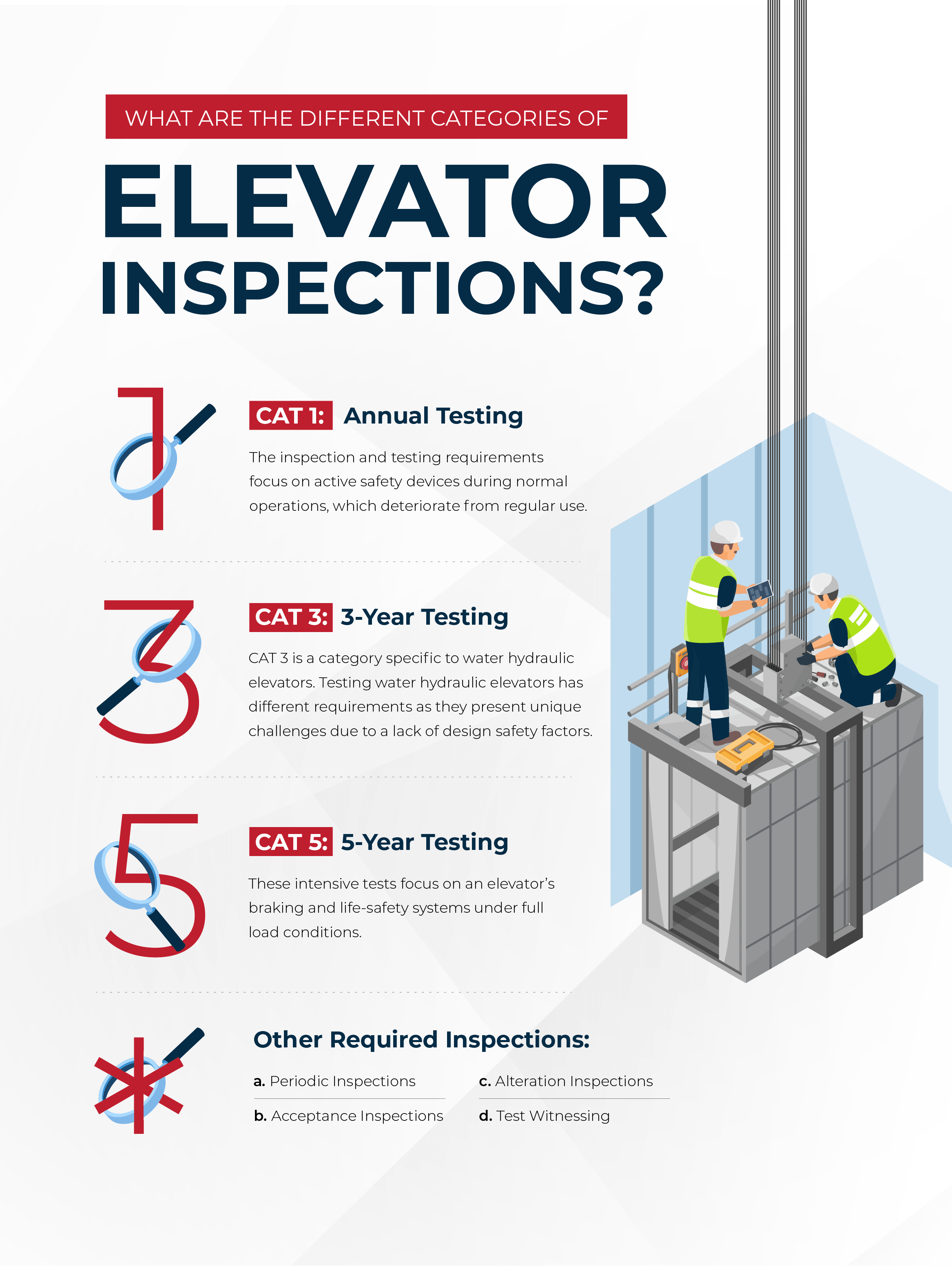
Elevator inspection categories include CAT 1, CAT 3, and CAT 5, as defined by the Safety Code for Elevators and Escalators. Category requirements are based on the elevator components’ function, wear patterns, and safety impact.
Category tests typically can’t substitute for one another. You may be allowed to perform similar tests simultaneously.
1. CAT 1: Annual Testing
CAT 1 is required every 12 months. The inspection and testing requirements focus on active safety devices during normal operations, which deteriorate from regular use. These elevator components come with predictable yearly wear cycles.
For example, CAT 1 guidance involves testing door interlocks that cycle thousands of times, governor mechanisms that accumulate operational hours, and electrical safety switches that are subject to environmental factors.
These safety devices must always function correctly each time an elevator operates. The testing involved does not subject the elevator to extreme stress, unlike the more rigorous CAT 5 testing.
Examples of inspection requirements usually include:
Car machine rooms.
Elevator car top.
Elevator pit.
Outside hoistway.
Braking system.
Firefighters' emergency.
The elevator type determines which parts require testing. For instance, hydraulic elevators have unique components compared to electric models.
2. CAT 3: 3-Year Testing
CAT 3 is a category specific to water hydraulic elevators, which must be tested every three years. A water hydraulic elevator is an old elevator type that uses municipal water pressure or an on-site water system.
Modern hydraulic elevators use oil and are subject to CAT 1 and CAT 5 testing. Testing water hydraulic elevators has different requirements as they present unique challenges due to a lack of design safety factors.
These elevators are increasingly rare. CAT 3 typically requires testing the:
Unexposed portions of pistons: Piston rods need to be thoroughly cleaned and examined for wear and corrosion. They should also be replaced if the diameter at any point is less than the root diameter of the threads.
Pressure vessels: Pressure vessels need to be cleaned and checked for conformance with requirements. They also need to undergo hydrostatic tests at high percentages of working pressure.
3. CAT 5: 5-Year Testing
CAT 5 requires inspection and testing every five years. These intensive tests focus on an elevator’s braking and life-safety systems under full load conditions. They can involve testing:
Car and counterweight safeties with rated load.
Governors at rated speed.
Brakes under maximum stress.
Oil buffers with actual impact.
CAT 5 aims to ensure elevator performance during worst-case scenarios. Components must function as designed during emergencies. These components are susceptible to gradual mechanical wear over extended periods, which may not always be apparent in annual, no-load testing.
Other Required Inspections
Federal, state, local governments, and provinces have widely adopted the Safety Code for Elevators and Escalators. You’ll find CAT testing requirements across jurisdictions, with some referring directly to ASME A17.1. Local governments may adopt more stringent requirements. Beyond category testing, jurisdictions impose additional inspection requirements depending on your circumstances.
Here are a few general requirements to remember:
Periodic Inspections
“Periodic inspection” is used as a general term in ASME A17.1. However, it may refer to different inspection requirements according to certain authorities. These inspections involve visually examining elevators and reviewing their operational performance. Timeline requirements vary. These checks are often crucial for identifying minor issues before they escalate into major safety concerns.
For instance, the Occupational Safety and Health Administration requires monthly inspections for marine terminal elevators. Some states require construction elevator inspections at least every three months, while others require an annual visual inspection.
Periodic inspections generally verify code and standard compliance, while category testing focuses on a safety system’s effectiveness. Who performs periodic inspections and whether they are announced varies by jurisdiction.
Acceptance Inspections
An acceptance test for elevators refers to inspections conducted on newly installed elevators prior to their operational use. It ensures that the elevator was installed correctly and in accordance with the approved building plans, while also confirming compliance with applicable standards and local codes.
This crucial step verifies that new installations meet all safety and performance criteria before public access.
Alteration Inspections
Alteration inspections are required whenever you perform elevator updates or repairs. ASME A17.1 defines alterations as any change to the equipment, including its parts, components, and subsystems, other than maintenance, repair, or replacement.
For instance, you may have upgraded the elevator’s door system, added a firefighter service, or replaced the controller. Unlike acceptance inspections, alteration inspections focus on the altered components, and it’s not a comprehensive inspection of the entire elevator. These inspections ensure that the altered components do not compromise the equipment's safety.
Test Witnessing
Test witnessing occurs alongside category testing, providing independent oversight to prevent conflicts of interest. Inspection agencies, such as ATIS, observe the testing procedures, confirm accurate results, and file applicable reports. Their unbiased presence adds an extra layer of credibility and assurance to the inspection process.
Who Performs Elevator Inspections?
Only qualified personnel can perform elevator inspections. Working with inspectors without the proper credentials creates legal liability for your company and results in repeat inspections, costing you more in the long term.
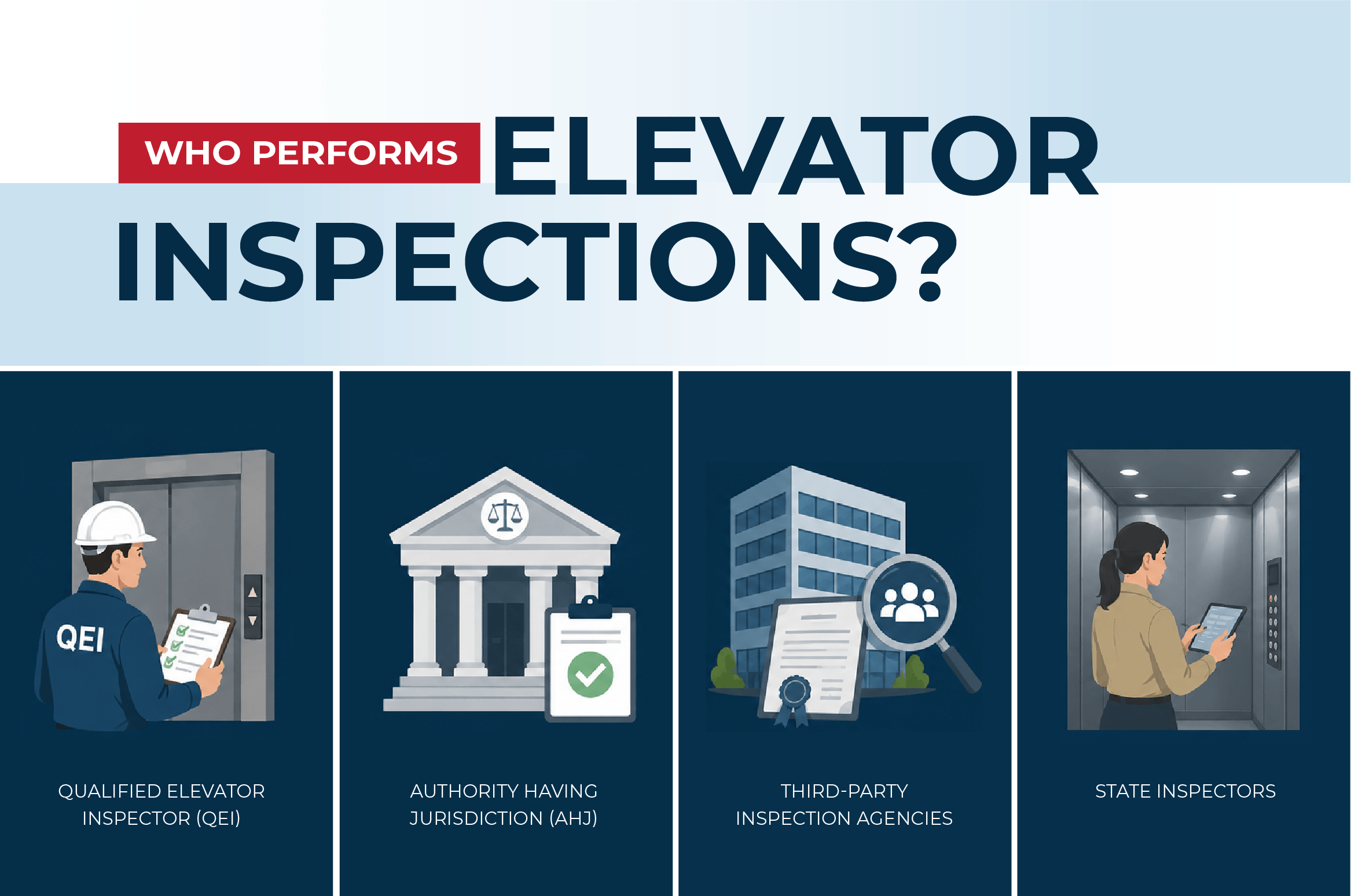
Each jurisdiction has its requirements regarding qualifications. Elevator inspections are generally performed by:
Qualified elevator inspector (QEI): A QEI is a certified professional responsible for inspecting vertical transportation systems, including elevators and escalators, to ensure they meet safety codes and regulations. They may work for private inspection firms, third-party inspection agencies, government agencies, or as independent contractors.
Authority having jurisdiction (AHJ): An AHJ is an agency, organization, or individual that enforces codes, standards, and regulations related to construction, fire prevention, and life safety. They review plans, issue permits, and conduct inspections. The AHJ varies depending on your facility’s location.
Third-party inspection agencies: These independent organizations evaluate elevators against standards, confirm their safety measures and assess their overall performance. These unbiased evaluators must be QEI. Agencies can be employed by an AHJ.
State inspectors: State inspectors must also be a QEI. They are government employees who can conduct acceptance, alteration, annual, and periodic inspections and enforce state requirements.
Risks of Noncompliance With Elevator Inspection Requirements
Non-code compliance is not an option, as the risks involve a person's safety. While fatality is rare, elevator-related injuries occur. You also risk legal liability, financial implications, and reputational damage.
Noncompliance can lead to:
Forced elevator shutdowns: Elevator issues can result in a red tag status, leading to a service suspension. Inspectors place a physical red tag on an elevator, rendering it out of service. The tag indicates that the elevator poses a safety hazard and cannot operate until the violations are corrected. Missing one inspection likely affects all your elevators, significantly impacting your facility’s operations.
Civil and criminal fines: Each AHJ has inspection report deadlines, and failure to submit the report results in late fees. You must also correct defects within a specified time frame. Penalties can range from hundreds to thousands of dollars. Noncompliance with statutes also results in fines. For instance, noncompliance with Florida's Elevator Safety statutes, which align with the latest ASME A17.1 standards, can result in fines up to $500.
Rejected insurance claims: Insurance policies typically require building equipment, including elevators, to be compliant with relevant codes and regulations. Insurers can deny claims for uninspected elevators, arguing you’ve misrepresented your facility’s compliance status when applying for insurance. Policies often include clauses requiring specific safety measures.
Personal liability: Even if a business or corporation owns the facility, noncompliance can pierce the corporate veil, particularly in elevator accidents caused by gross negligence or willful misconduct. This circumstance makes building owners personally liable for incidents. For instance, in Maine, elevator owners are guilty of criminal operation if the elevator lacks a valid inspection certificate.
How to Ensure Compliance With Elevator Inspection Requirements
It can be tricky to navigate all compliance requirements, especially if you’re managing multiple facilities.
For large businesses operating across North America, the challenge is significant, as regulations can vary greatly not only between individual states like Florida and Nevada, but also across national borders with differing requirements in Canada. Performing these steps can help:
Develop an effective compliance system: You need one to keep up with evolving safety codes. For instance, ASME A17.1 was updated in 2025, consisting of additional requirements from the 2022 version. Work with professionals who can review these changes and update your checklists accordingly. Your calendar should also include relevant deadlines, so you can schedule inspection and testing services as needed.
Determine optimal processes: Meeting minimum requirements is the baseline, but you can also identify steps that result in optimal performance. Pay attention to which components can benefit from upgrades. While upgrades can increase costs, your facility can benefit in the long term from improved safety.
Leverage trusted third-party businesses: Third-party services can help assess whether your facility is compliant with applicable codes and regulations. They can also suggest action plans for any potential violations. Working with these companies is especially sensible if you operate in multiple jurisdictions. It’s easier to miss deadlines when managing large portfolios, with penalties multiplying across the board.
A Quality System Makes Elevator Compliance Easy
Navigating the complex landscape of elevator inspection and testing requirements across the U.S. can be a challenge. It demands a robust, systematic approach to get it right. This dynamic regulatory environment often requires constant attention and adaptation from facility managers.
Beyond the core category inspections, local jurisdictions and specific circumstances introduce additional mandates that businesses must be familiar with and follow. Effective compliance hinges on proactive management, depending on the expertise of qualified professionals and engaging trusted third-party services.
Staying current with these ensures not only adherence to evolving safety standards but also guards against operational disruptions, significant financial consequences, and potential legal liabilities, ultimately protecting both users and facility owners.
Navigate the complexities of CAT 1, 3, and 5 testing and learn more about our comprehensive elevator inspection services.
Take the next step and schedule your facility's required inspections today.